
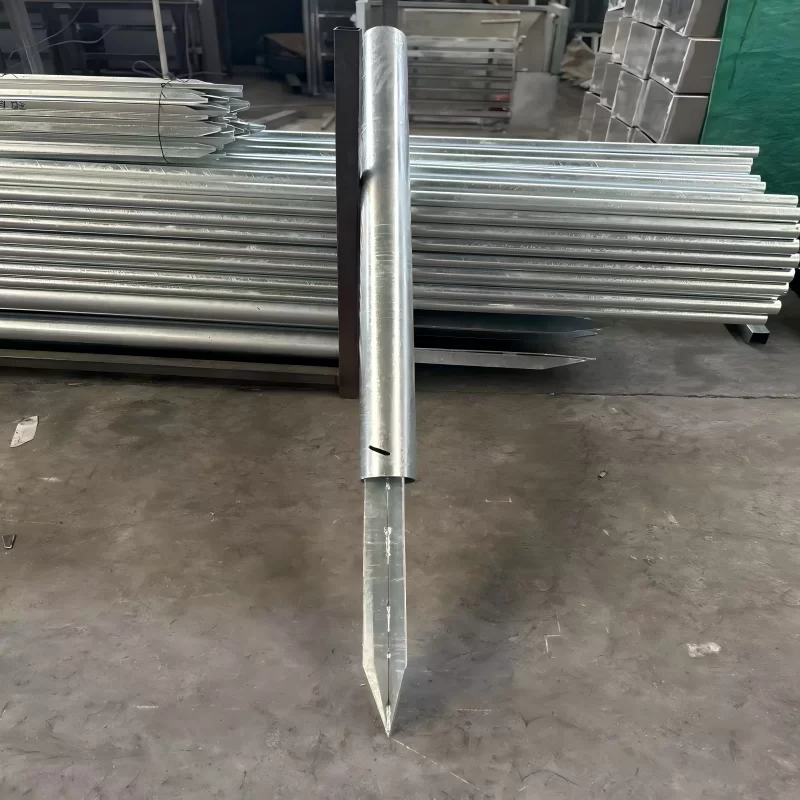


Strainer Posts for Secure and Long-Lasting Fencing Systems
High-strength strainer posts are designed to securely anchor fencing systems, providing long-lasting stability and corrosion-resistant performance for agricultural and perimeter fencing. Made for reliable use in these applications, they are supplied in rolls with a minimum order ···
High-strength strainer posts are designed to securely anchor fencing systems, providing long-lasting stability and corrosion-resistant performance for agricultural and perimeter fencing. Made for reliable use in these applications, they are supplied in rolls with a minimum order quantity of 50 rolls.
Strainer posts are a critical structural component in any secure, long-lasting fencing system. Installed at the ends of fence lines, corners, gateways, and where the fence changes direction, strainer posts are engineered to withstand the full tension applied by the fencing wires. Their primary function is to anchor the fence firmly, ensuring stability, alignment, and durability—even under heavy loads and challenging environmental conditions.
Our strainer posts for secure, long-lasting fencing systems are manufactured using high-strength materials and precision engineering to meet the requirements of agricultural, livestock, and perimeter fencing applications. Designed to withstand continuous wire tension, these posts provide a stable foundation that helps prevent sagging, leaning, and structural failure over time. Suitable for use on rural farms, in large-scale agricultural projects, and in security fencing installations, they deliver dependable performance and long-term reliability.
The robust construction of these strainer posts provides excellent resistance to bending and deformation. Heavy-duty steel profiles and reinforced designs enable effective performance in both permanent installations and high-tension fencing systems. When used together with proper bracing, they create a stable anchor point that helps maintain fence integrity in areas exposed to strong winds, uneven terrain, or livestock pressure.

To support a long service life, the strainer posts feature corrosion-resistant surface treatments, such as hot-dip galvanizing or protective coatings. These finishes help protect the posts against rust, moisture, and environmental exposure, making them suitable for outdoor use in a wide range of climates. Reduced corrosion supports lower maintenance requirements and consistent performance over many years.
Installation flexibility is another key advantage. The strainer posts are compatible with a wide range of fencing materials, including wire mesh, barbed wire, woven wire, and electric fencing systems. Depending on soil conditions and project requirements, they can be driven, concreted, or bolted into position. This versatility makes them a practical choice for both new fencing installations and system upgrades.
By delivering superior load-bearing performance and long-term durability, these strainer posts are essential to building fencing systems that are secure, stable, and cost-effective. They help protect livestock, define boundaries, and improve overall fencing performance while minimizing ongoing maintenance and repair costs.
Product Features
1、High-strength steel construction for maximum load-bearing capacity
2、Engineered to withstand high wire tension at fence ends and corners
3、Corrosion-resistant galvanized or coated surface
4、Suitable for agricultural, livestock, and perimeter fencing
5、Compatible with multiple fencing wire types
6、Designed for easy integration with bracing systems
8、Long service life for outdoor use
Product Advantages
1、Helps ensure fence stability and prevents wire sagging
2、Reduces long-term maintenance and replacement costs
3、Reliable performance in harsh weather conditions
4、Improves overall fence strength and safety
5、Supports professional and large-scale fencing projects
1、Why Strainer Posts for Secure, Long-Lasting Fencing Systems Are Essential in Agricultural Projects
In agricultural projects, fencing systems play a vital role in protecting livestock, defining boundaries, and managing land efficiently. At the core of any dependable fence structure are strainer posts for secure, long-lasting fencing systems, which act as the primary load-bearing elements within the installation. Unlike intermediate posts, strainer posts are specifically designed to withstand the full tension applied by the fencing wires, making them indispensable in agricultural environments.
One of the main reasons strainer posts are essential is their ability to anchor the fence firmly at key stress points. These include fence ends, corners, gateways, and sections where the fence changes direction. In agricultural settings, fences are often subjected to continuous pressure from livestock, uneven terrain, and environmental factors such as wind and soil movement. Without properly installed strainer posts, wire tension can cause the fence to sag, shift, or fail prematurely.
Agricultural projects also require durability and long-term performance. Strainer posts are typically made from high-strength steel or treated materials that resist bending, deformation, and corrosion. This strength helps keep the fencing system stable over many years, even under demanding outdoor conditions. By maintaining consistent wire tension, strainer posts help preserve the integrity of the entire fence line.
Another important consideration is animal safety and control. Secure fencing supported by well-installed strainer posts reduces the risk of livestock escaping or becoming entangled in loose wires. This is especially critical for cattle, sheep, and other large animals that exert significant force against fences. A stable fencing system supports better herd management while helping minimize stress and injury risks.
From a cost-efficiency perspective, strainer posts can reduce long-term maintenance requirements. Agricultural fences that rely on weak anchor points often require frequent repairs, re-tensioning, or post replacement. By investing in quality strainer posts at the initial installation stage, farmers and project managers can help avoid recurring repair costs and downtime.
Overall, strainer posts for secure, long-lasting fencing systems are essential in agricultural projects because they provide structural strength, long-term reliability, improved safety, and reduced maintenance. They form the foundation of a fencing system that performs consistently under real operational farming conditions.
2、How Strainer Posts for Secure, Long-Lasting Fencing Systems Improve Fence Stability
Fence stability is one of the most important factors influencing the performance and service life of agricultural and perimeter fencing. Strainer posts for secure, long-lasting fencing systems significantly improve fence stability by functioning as the primary tension-bearing components that keep the entire structure aligned and secure.
Strainer posts are installed at locations where fencing tension is highest, such as corners, ends, and gateways. These areas experience constant pulling forces from tensioned wires. Without strong strainer posts, this tension can gradually pull posts inward, leading to wire sagging and misalignment. By absorbing and distributing these forces, strainer posts help maintain consistent tension along the full fence line.
The structural design of strainer posts also plays a key role in stability. Heavy-duty profiles, reinforced steel construction, and precise manufacturing help resist bending and rotation. When properly braced, strainer posts form a rigid anchor system that helps prevent movement, even in soft soil or on uneven terrain. This rigidity reduces stress on intermediate posts, supporting extended service life.
Environmental conditions further test fence stability. Wind loads, soil erosion, temperature fluctuations, and moisture can weaken fencing systems that are not adequately supported. Corrosion-resistant coatings help strainer posts maintain their strength over time, preventing structural deterioration. This is especially important in agricultural areas where fences are exposed throughout the year to weather and moisture.
Livestock behavior also highlights the importance of stability. Animals leaning, rubbing, or pushing against fences create dynamic loads that can quickly undermine weaker structures. Secure fencing anchored by strainer posts remains upright and functional, even under repeated pressure. This improves both fence durability and animal safety.
In addition, strainer posts strengthen the performance of modern fencing systems, including electric and high-tensile wire fences. These systems depend heavily on correct wire tension to function properly. Stable anchor points provided by strainer posts help ensure optimal performance and consistent containment.
By reinforcing critical stress points, strainer posts for secure, long-lasting fencing systems significantly improve overall fence stability—resulting in safer, stronger, and longer-lasting fencing installations.
3、Choosing the Right Strainer Posts for Secure, Long-Lasting Fencing Systems
Selecting the right strainer posts for secure, long-lasting fencing systems is a critical decision that directly affects fence performance, durability, and long-term maintenance costs. Agricultural and perimeter fencing projects vary widely in scale and operating conditions, making correct post selection essential.
The first consideration is material strength. Strainer posts must be able to handle continuous wire tension without bending or shifting. High-strength steel strainer posts are commonly preferred for their superior load-bearing capacity and consistent performance. Material quality directly influences the fence’s ability to remain stable over time.
Corrosion resistance is another key factor. Because strainer posts are installed outdoors and often come into contact with soil and moisture, protective finishes such as hot-dip galvanizing or durable coatings are essential. These treatments help prevent rust and degradation, supporting long service life in demanding environments.
Post size and profile should be selected based on the fence type and livestock pressure. High-tensile fencing systems and environments with larger livestock typically require heavier-duty strainer posts with reinforced designs. Compatibility with bracing systems is equally important, as effective bracing significantly improves the overall performance of the strainer post.
Installation conditions also influence post selection. Soil type, terrain, and climate determine whether posts should be driven, concreted, or bolted into place. Choosing strainer posts that support flexible installation methods improves on-site efficiency and helps ensure proper anchoring.
Finally, long-term value should guide the decision. While higher-quality strainer posts may require a greater initial investment, they can reduce maintenance needs, help prevent premature fence failure, and improve overall reliability. Selecting the right strainer posts supports a fencing system that remains secure, stable, and cost-effective for years to come.