
Electric Fencing for Livestock how does electric fencing for livestock work Technical Analysis
The effectiveness of livestock containment often relies on a psychological barrier rather than just a physical one. Unlike traditional timber or woven wire, electric fencing uses a brief, high-voltage pulse to discourage animals from crossing a boundary, creating a learned avoidance behavior that minimizes stress for the handler and the herd.
Understanding the underlying electronics and circuitry is essential for any farm operator looking to maximize grazing efficiency. The transition toward rotational grazing and precision livestock management has made these systems indispensable, as they allow for rapid paddock adjustment without the need for permanent, high-cost installations.
To properly implement these measures, one must first understand how does electric fencing for livestock work from a technical perspective, ensuring that the energizer, grounding, and conductor materials are synchronized for maximum conductivity.
The Circuit Logic of Electric Containment

At its simplest level, an electric fence is an open circuit. The energizer sends a high-voltage pulse through the fence wire, but the current cannot flow back to the source until the circuit is completed. This happens when an animal touches the wire, allowing the electricity to pass through the animal's body into the earth.
Because the energizer uses pulsed DC current rather than a continuous flow, it delivers a sharp, memorable shock that is safe for the animal but powerful enough to create a strong psychological deterrent. This cycle of charge and discharge is what defines the operational pulse of the system.
Core Hardware Components and Their Roles
The energizer serves as the brain of the system, converting power from a mains outlet, battery, or solar panel into high-voltage pulses. The selection of the energizer must match the total length of the fence and the expected level of vegetation interference, as weeds touching the wire can cause "leaks" that diminish the shock's intensity.
Conductors, typically galvanized steel or poly-wire, carry the pulse across the perimeter. While galvanized steel offers superior longevity and structural strength, poly-wires are preferred for temporary paddocks due to their flexibility and ease of relocation. The conductivity of these materials directly affects the voltage drop over long distances.
Insulators are the unsung heroes of the setup, preventing the electricity from leaking through the fence posts into the ground. Without high-quality UV-resistant insulators, the system would short-circuit immediately, rendering the boundary useless and wasting energy.
The Critical Role of Grounding Systems
Many operators mistakenly focus only on the "hot" wire, but the grounding system is where most electric fence failures occur. If the earth cannot efficiently conduct the electricity back to the energizer, the animal will not receive a sufficient shock, regardless of how powerful the energizer is.
Effective grounding requires a low-resistance path to the earth, typically achieved through several galvanized steel ground rods driven deep into moist soil, ensuring the circuit is completed the instant a livestock animal touches the conductor.
In sandy or rocky soils, where electrical conductivity is poor, specialized grounding techniques—such as adding salt or charcoal around the rods or using multiple parallel ground arrays—are necessary to maintain the integrity of the psychological barrier.
Performance Metrics Across Livestock Types
Different animals have varying thresholds for electrical sensitivity. Cattle, for instance, have thicker hides and require a higher voltage to feel the pulse, whereas sheep and goats are more sensitive and can be managed with lower-output energizers.
Evaluating the "shock value" is not just about the voltage number on the box, but the actual delivered energy (joules). A high-voltage, low-joule pulse may be ignored by a determined bull, while a high-joule pulse ensures the animal respects the boundary.
Figure 2. Relative Sensitivity and Voltage Requirements by Species
Operational Integration in Modern Farming
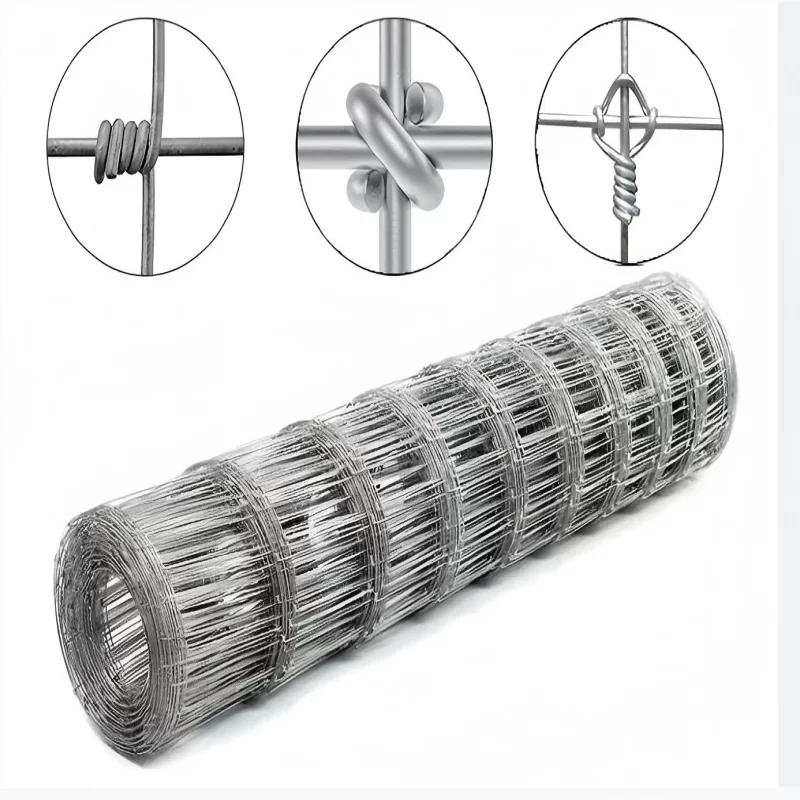
Electric fencing is rarely used in isolation. In a professional agricultural setting, it is often integrated with permanent physical barriers. For example, a high-performance chain link system can provide the primary structural security, while an offset electric wire prevents livestock from leaning on or rubbing against the fence, which would otherwise cause mechanical wear.
By combining the industrial durability of galvanized steel mesh with the psychological deterrence of electric pulses, farmers can create a multi-layered security perimeter. This hybrid approach reduces maintenance costs and ensures that animals are contained even if a single component of the system fails.
Evolving Trends in Boundary Technology
The industry is currently moving toward "smart" fencing solutions. Integrated sensors can now notify a farm manager via smartphone the moment a fence line is broken or the voltage drops below a critical threshold, eliminating the need for manual perimeter checks with a handheld voltmeter.
Sustainability is also driving the adoption of high-efficiency solar energizers. These units are designed with advanced power management systems that optimize battery charging during winter months, ensuring consistent pulse delivery in remote pastures where grid power is unavailable.
Furthermore, there is a growing emphasis on modularity. The use of rapid-assembly panels and customizable configurations allows livestock managers to relocate boundaries in minutes, facilitating highly precise rotational grazing patterns that improve soil health and pasture regrowth.
Comparative Analysis: Electric vs. Physical Barriers
When choosing between a purely physical barrier and an electric system, the decision usually comes down to the objective: is the goal to physically stop a force, or to discourage a behavior? Physical fences are essential for high-security zones but can be costly and labor-intensive to install over vast acreages.
Electric systems offer unparalleled flexibility and a lower initial cost for large areas, but they require ongoing monitoring of the energizer and grounding. The risk of "fence fatigue," where animals become accustomed to a weak shock, necessitates precise voltage management.
For those seeking the optimal balance, utilizing industrial-grade galvanized steel for the perimeter and electric wires for internal paddock division provides the most resilient and cost-effective long-term solution.
| Evaluation Factor | Electric Fencing | Chain Link/Mesh | Wood/Iron Rails |
|---|---|---|---|
| Installation Speed | Rapid (Modular) | Moderate | Slow (Manual) |
| Initial Investment | Economical | Moderate | High |
| Maintenance Need | Regular Monitoring | Minimal | Frequent Painting |
| Psychological Impact | High Deterrence | Low (Physical Only) | Low (Physical Only) |
| Lifespan (Corrosion) | Variable (Wire Dep.) | Extended (Galvanized) | Prone to Decay |
| Adaptability | Very High | Moderate | Low (Fixed) |
Questions & Answers
No, when installed correctly, electric fencing is designed to be safe. The energizer delivers a high-voltage but very low-amperage pulse. This creates a sharp, momentary shock that causes the animal to jump back and associate the fence with discomfort, but it does not cause permanent physical harm or cardiac arrest in healthy livestock.
The most common causes are poor grounding or "shorting" caused by vegetation. If grass or weeds touch the wire, they bleed electricity into the ground. Additionally, if your ground rods are in dry soil or are not driven deep enough, the circuit cannot be completed effectively, resulting in a weak or non-existent shock.
Selection depends on the animal species and the length of the fence. Cattle require more joules than sheep. You must also consider the "mileage" of the fence; as the distance increases, voltage drops. Always choose an energizer with a slightly higher capacity than your calculated needs to account for vegetation leakage.
In many cases, yes, but for high-security or predator-prone areas, a hybrid system is better. While electric fencing provides excellent behavioral control, a physical mesh fence—such as a galvanized chain link system—provides an impassable barrier that does not rely on power or animal psychology to function.
The most effective strategy is preventative maintenance: keeping the fence line clear of vegetation and testing the voltage weekly with a digital voltmeter. Using high-quality UV-stabilized insulators and hot-dipped galvanized conductors also reduces the frequency of expensive repairs and wire replacements.
Modern solar energizers are quite reliable, provided they are paired with a deep-cycle battery and a properly sized solar panel. In regions with very short winter days, some operators use a hybrid system or a larger battery bank to ensure the fence remains charged during extended periods of low sunlight.
Final Thoughts
Effective livestock management is a balance between structural integrity and behavioral psychology. By integrating the technical precision of electric pulsing with the industrial strength of permanent fencing solutions, producers can significantly reduce labor costs while enhancing animal security.
The key to success lies in the details: high-quality grounding, consistent voltage monitoring, and the selection of materials that can withstand the rigors of the outdoor environment. Investing in professional-grade hardware ensures that the boundary remains a reliable tool for years to come.
Leave A Comment